
Explore advanced options for Male Infertility Treatment in Jaipur at Kulki IVF. Learn about medical therapies, ICSI protocols, and customized reproductive care.
Conception challenges are often assumed to stem primarily from female factor issues. However, clinical studies show that male reproductive factors contribute to nearly half of all multi-year conceiving difficulties. Whether the underlying factor relates to sperm production, motility, structure, or functional pathways, modern reproductive science has advanced significantly. With personalized diagnostic plans, targeted hormone adjustments, and specialized laboratory protocols, achieving a successful pregnancy is highly manageable through modern Male Infertility Treatment in Jaipur.
Spermatogenesis-the biological process of sperm production-takes approximately 74 days. During this time, developing sperm cells are highly vulnerable to hormonal fluctuations, oxidative stress, physical trauma, and temperature changes. A compromise in any part of this production cycle can lead to abnormal semen parameters. At Kulki IVF, we evaluate male reproductive health with absolute clarity and sensitivity. Our technical team works closely with couples to diagnose underlying cellular causes precisely, ensuring your treatment plan receives the exact scientific support required for optimal success.
A drop in reproductive parameters can happen due to a variety of internal biological factors or external daily habits. Identifying the exact cause is the first step toward effective management. The main clinical classifications of sperm abnormalities include:
An accurate, comprehensive diagnosis is essential before beginning any treatment. At Kulki IVF, we utilize advanced diagnostic tools, including:
At Kulki IVF, we treat male fertility challenges through highly targeted medical plans tailored specifically to your body's biological profile, avoiding generalized, automated templates entirely.
When hormone levels are unbalanced, we prescribe targeted medication (such as gonadotropins or anti-estrogens) to stimulate natural sperm production. Alongside these therapies, our clinical team designs antioxidant protocols to reduce oxidative stress and improve overall sperm quality.
For patients diagnosed with a clinically significant varicocele, microscopic surgery is highly effective. Using an operating microscope, our surgeons identify and tie off the dilated veins while preserving the delicate arteries and lymphatic vessels, which helps restore optimal testicular temperature and function.
For men with azoospermia (zero sperm in the ejaculate), we can often retrieve viable sperm directly from the reproductive tract using minimally invasive procedures:
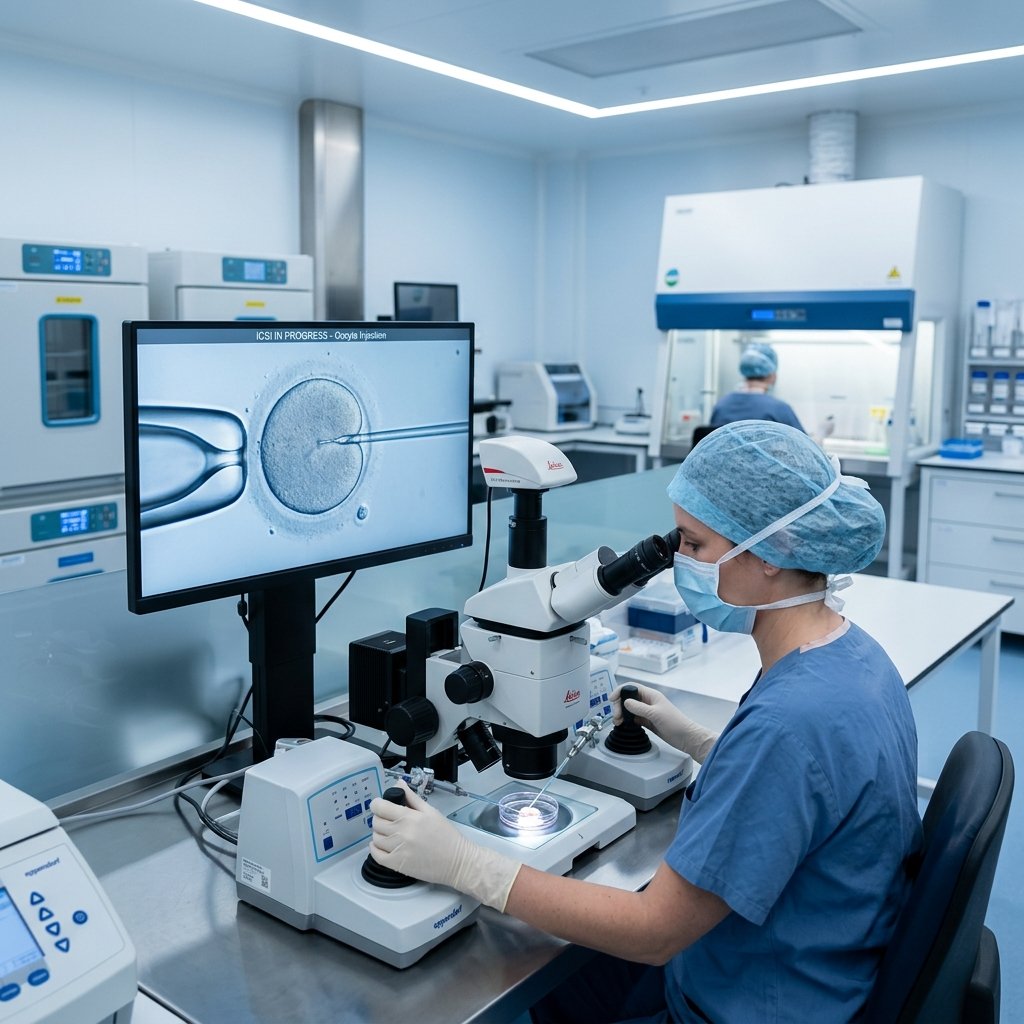
When sperm counts, motility, or morphology are extremely low, standard IVF may not result in fertilization. In these cases, we perform ICSI inside our Class 10,000 modular laboratory cleanrooms. Our embryologists select a single healthy sperm cell and inject it directly into a mature egg, bypassing physical fertilization barriers with absolute precision.
| Procedure / Technology | Clinical Indication | Clinical Advantage |
|---|---|---|
| Micro-TESE | Non-Obstructive Azoospermia (Testicular Failure) | Highest recovery rate for severe cases with minimal testicular damage. |
| TESA / PES-strong> | Obstructive Azoospermia (Blockage or Vasectomy) | Simple, outpatient procedure with quick recovery and high retrieval rates. |
| MACS (Magnetic Activated Cell Sorting) | High Sperm DNA Fragmentation Index (DFI) | Filters out damaged or apoptotic sperm cells to select the healthiest sperm for ICSI. |
| Microfluidic Sorting | Recurrent IVF Failure / High Oxidative Stress | Selects sperm with the highest motility and lowest DNA damage without chemical treatment. |
Advanced lab environments perform at their peak when directed by exceptional clinical experts. Our medical panel-led by Dr. Asha Sushawat, Dr. Aarti Soni, and senior embryologist Dr. Ssuniti-brings decades of collective clinical practice and international research insight to your care pathway. Their meticulous approach ensures that complex multi-cycle failures are diagnosed accurately, helping you make informed decisions at every stage.
Overcoming reproductive challenges requires the right blend of advanced medical science and compassionate clinical care. Connect with the dedicated specialists at Kulki IVF Fertility & ART Center today to schedule your comprehensive baseline evaluation and start your path toward parenthood with absolute confidence.
In most cases, there are no obvious symptoms of male infertility. Sexual function, erection, and ejaculation are usually normal. The primary sign is the inability to conceive after one year of unprotected intercourse. Some men may experience pain or swelling in the testicles due to a varicocele.
According to World Health Organization (WHO) guidelines, a normal sperm count is 15 million or more sperm per milliliter of semen, with at least 40% progressive motility and 4% normal morphology.
Yes. If the cause is obstructive (a blockage), sperm can be retrieved easily using procedures like PESA or TESA. If the cause is non-obstructive (poor sperm production), advanced micro-TESE surgery can retrieve viable sperm directly from the testicles in up to 50-60% of cases.
Intracytoplasmic Sperm Injection (ICSI) is a specialized form of IVF. Instead of mixing oocytes with sperm in a dish, our embryologist uses micro-needles to inject a single selected, healthy sperm directly into each physical egg, bypassing physical fertilization barriers.
Smoking, excessive alcohol intake, stress, obesity, and exposure to high heat (such as hot tubs or tight clothing) can raise scrotal temperatures and oxidative stress, negatively impacting sperm count, motility, and DNA integrity.