
Looking for the Best IVF Fertility Center in Jaipur for 2026? Read our ultimate guide on advanced IVF, ICSI, modular cleanrooms, and success rates.
The landscape of assisted reproduction has transformed rapidly, moving away from standard, unguided cycle templates. To achieve high success rates, modern clinics must incorporate high-resolution diagnostics, precise hormone dosage tracking, and advanced genetic screenings. For couples evaluating treatment options, choosing a center that implements these clinical protocols is vital to minimizing failure rates and ensuring patient safety.
As the premier best IVF fertility center in Jaipur, Kulki IVF utilizes evidence-based cycle mapping. We perform baseline AMH checks, transvaginal follicle monitoring, and semen profiles to identify physiological factors beforehand, helping patients plan their journey with complete scientific clarity.
In 2026, reproductive medicine is characterized by a strong focus on personalization and genetic accuracy. We have transitioned from general stimulation protocols to highly individualized ovarian stimulation protocols (IOSP). These protocols use your specific baseline biomarkers-such as age, AMH, and antral follicle count-to calculate the precise medication dosage required for optimal egg development. This personalized approach dramatically improves egg quality and reduces the risk of Ovarian Hyperstimulation Syndrome (OHSS), making the treatment process much safer and more efficient for the patient.
Another major advancement in 2026 is the routine integration of Preimplantation Genetic Testing (PGT), including PGT-A (for aneuploidies), PGT-M (for monogenic/single-gene disorders), and PGT-SR (for structural rearrangements). Genetic testing allows us to screen embryos for chromosomal abnormalities before implantation, significantly reducing miscarriage rates and avoiding the transmission of hereditary disorders. For patients with a history of recurrent implantation failure or unexplained miscarriages, PGT offers invaluable insights and a much higher likelihood of a successful term pregnancy.
To further enhance security and quality control, our embryology lab utilizes state-of-the-art electronic witnessing systems. Every dish and tube is tagged with a unique electronic identifier linked directly to the patient's record. This RFID (Radio Frequency Identification) technology monitors all sample movements inside the lab, ensuring absolute sample verification and preventing mix-ups. Additionally, advanced time-lapse imaging systems track embryo development continuously without removing them from the incubator, allowing embryologists to analyze cell division patterns and choose the strongest embryos with maximum accuracy. By combining advanced RFID security, continuous time-lapse monitoring, and genetic screening technologies, our embryology laboratory provides a level of quality control that maximizes cycle safety, minimizes potential failures, and provides couples with the absolute highest probability of conceiving a healthy child and bringing their beautiful baby home in health and happiness.
Developing embryos are extremely sensitive to microscopic contaminants and chemical fumes in the air. A slight variance in oxygen levels or room temperature can cause cellular stress and halt embryo development. To secure cell viability, a world-class center must maintain a highly controlled laboratory cleanroom.
Our modular embryology laboratory is designed to strict positive-pressure standards, using carbon-HEPA filters to continuously scrub the air and remove dust and VOCs. This strict quality control creates an optimal micro-environment, mimicking the natural conditions of the maternal body to support healthy blastocyst culture.
| Clinical System | Purpose & Embryo Viability Impact |
|---|---|
| HEPA Cleanrooms | Removes particulate impurities to prevent cellular stress in embryology. |
| Laser-Assisted Hatching | Thinning the embryo's outer layer to improve uterine implantation rates. |
| Blastocyst Culturing | Nurturing cells to the Day-5 stage for superior cycle outcomes. |
The micro-environment inside embryology incubators is the single most critical factor in successful blastocyst culture. Embryos cultured in an environment with high volatile organic compounds (VOCs) or fluctuating carbon dioxide and oxygen levels are significantly more likely to suffer from developmental arrest. This is why our Class 10,000 modular laboratory is equipped with state-of-the-art triple-gas incubators. These incubators maintain low oxygen tension (typically around 5%) to mimic the physiological conditions of the fallopian tubes and uterus, ensuring that embryos grow in an environment that is as natural as possible.
Advanced lab equipment is most effective when directed by experienced experts. Our medical panel is led by Dr. Asha Sushawat, a veteran reproductive specialist with over 30 years of clinical practice in gynecology and advanced assisted reproductive treatments. Working with her, Dr. Aarti Soni designs customized ovarian stimulation plans, adjusting hormone dosages based on regular monitoring scans to protect patient safety.
Our senior embryologist, Dr. Ssuniti, manages all cleanroom lab procedures, including micromanipulation (ICSI) and cryopreservation vitrification, ensuring that eggs and embryos are handled with extreme care.
Our patient-first philosophy means that we spend significant time analyzing each couple's specific fertility profile before proposing a treatment plan. We evaluate uterine receptivity, hormone profiles, and lifestyle factors to identify any potential hurdles. This meticulous diagnostic stage allows us to select the most appropriate treatment pathway, whether it involves simple ovulation induction, Intrauterine Insemination (IUI), standard IVF, or advanced Intracytoplasmic Sperm Injection (ICSI).
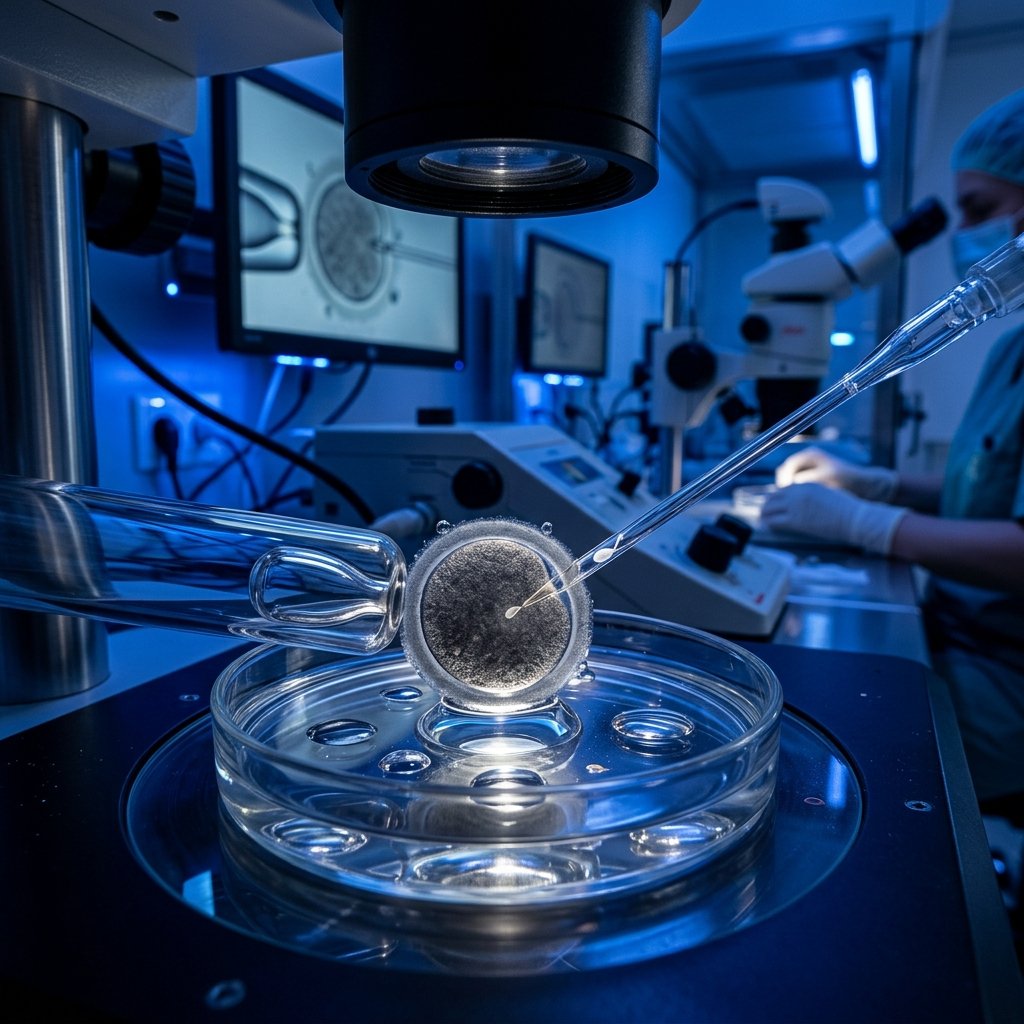
We provide a comprehensive range of assisted reproductive options, including IVF, ICSI, IUI, and egg donor cycles. For couples facing male factor challenges, Intracytoplasmic Sperm Injection (ICSI) is performed under high-magnification optics to select and inject a single healthy sperm directly into the egg, bypassing common anatomical barriers to fertilization.
We also provide absolute pricing transparency, delivering clear cost breakdowns during your initial visit. By removing financial stress and unexpected costs, we allow patients to focus fully on their health and family goals.
To help you understand the clinical options available in our 2026 treatment plans, the table below outlines the advanced embryology technologies we utilize:
| Technology Name | Clinical Indication | Expected Clinical Benefit |
|---|---|---|
| ICSI Micromanipulation | Severe male factor infertility, unexplained fertilization failure. | Direct fertilization of the mature oocyte, maximizing embryo numbers. |
| Laser-Assisted Hatching | Advanced maternal age, thickened zona pellucida, frozen embryo transfers. | Facilitates natural embryo hatching and improves implantation in the endometrium. |
| Blastocyst Culture | Good embryo yield, single embryo transfer strategy. | Allows selection of the most viable embryos on Day 5, improving success rates. |
| Vitrification (Cryo) | Freeze-all cycles, genetic testing, fertility preservation. | Safe preservation of embryos and gametes with near-100% post-thaw survival. |
By utilizing these advanced technologies in a coordinated manner, our clinical team under Dr. Asha Sushawat has been able to maintain success rates that consistently rank among the best in the nation. We are committed to constantly updating our laboratory and clinical protocols to ensure that we offer the most advanced reproductive healthcare possible.
Our center maintains a highly competitive success rate of 70% to 80%, supported by Class 10,000 modular laboratory cleanrooms and personalized treatment planning.
Vitrification is an ultra-rapid cooling technique that solidifies cells without forming ice crystals, preventing cell damage and ensuring high survival rates when thawing eggs or embryos.
No, we believe in absolute financial transparency. We provide a completely itemized cost sheet during your initial consultation, with no hidden laboratory or diagnostic charges.
We select embryos based on their morphological development and growth rate, often culturing them to the blastocyst stage (Day 5) to identify the strongest and most viable embryos for implantation.
No. The diagnostic phase is typically completed within a single menstrual cycle. It involves a baseline transvaginal ultrasound, hormone blood tests, and semen analysis, allowing us to map out your treatment path quickly and accurately.
Schedule an assessment with our expert reproductive doctors today to map out a clear, transparent path toward parenthood.